Panama exited the world's biggest reading exam. In a tiny jungle school, we spent two years asking a smaller question: what does it actually take to get children to read?
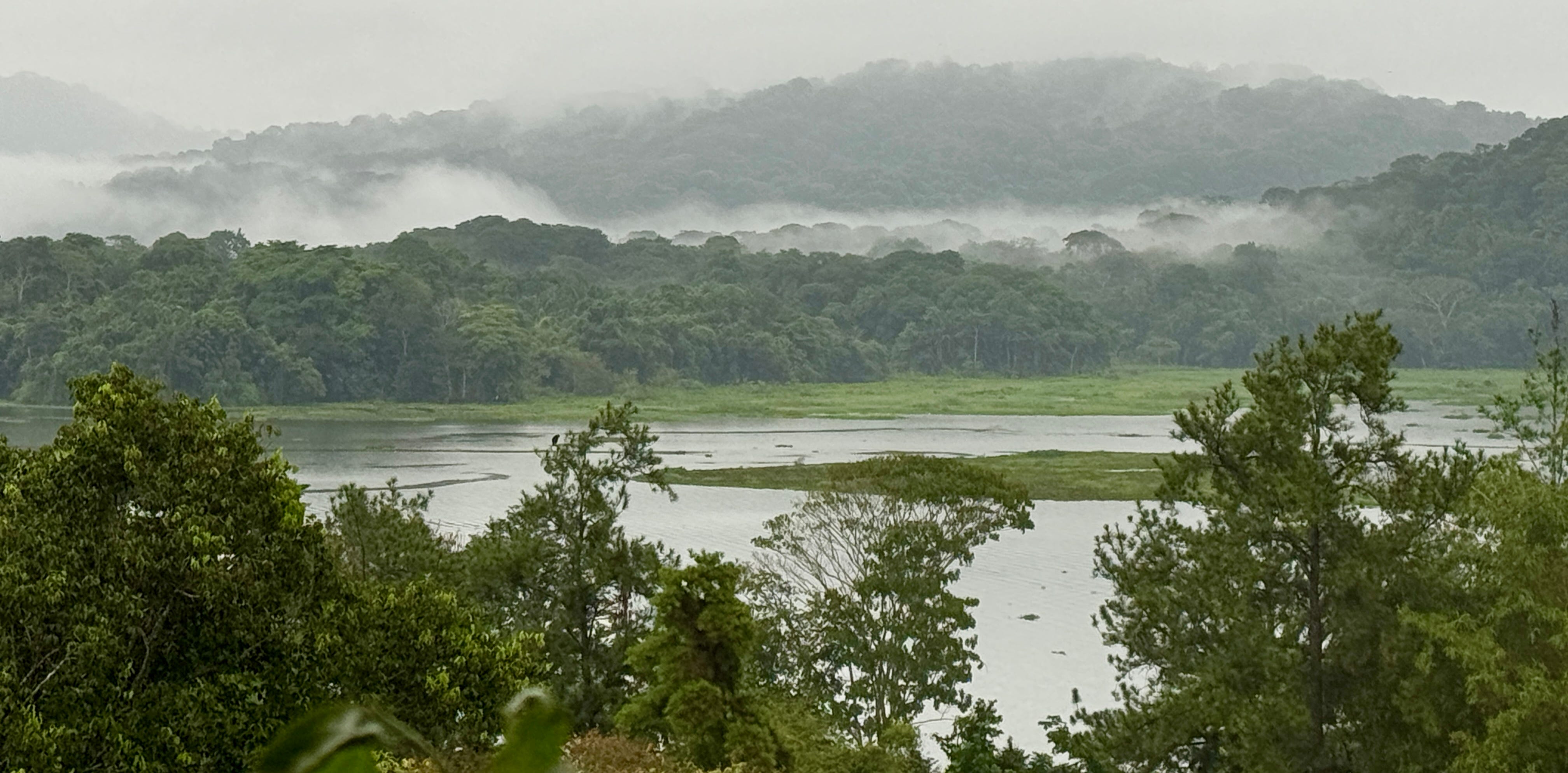
I am at a rooftop café above the Panamanian rainforest. It is raining. Low clouds snake through the trees. For a moment I stare in childlike awe. But, behind me, at the next table, a child is watching something on a tablet. It sounds like cars crashing over and over. It is really loud. One table over a mother sits with two children, each nose buried in a separate device, all three look comatose. Further on, a boy is screaming at full volume into his father’s phone, which is being held up to his face, force-fed.

I open my laptop to read the OECD’s PISA results that hit my newsfeeds earlier this week, and find the data already being acted out behind me.
The numbers are the worst on record. Across the OECD the average reading score has fallen to 461, the lowest since the survey began. One in five fifteen-year-olds is now a low performer in science, mathematics and reading. After three hours on screen, combining in class and at home, performance falls.
Panama is not in this round. In July 2024 the Ministry of Education notified the OECD that the country would withdraw. The minister, Lucy Molinar, made a cost argument. The test cost over 200,000 balboas, and with that money, she could train teachers and equip schools. She also made a second argument, quieter and more interesting, that the exam would only confirm what everyone already knows. Panama had come 74th of 81 in 2022, and 71st of 77 in 2018. The country plans to return in 2029, after a curriculum redesign.
Freire called it the banking model of education. Run a school like a bank and Molinar’s question is the only sensible one: where is the return?
I sympathize. I spent the last two years running a reading intervention in which tests and grades were nonexistant. Students got specific feedback constantly, every day, from adults sitting beside them.
Here I will explain what we built instead, starting with this basic concept.
Independent reading is absolutely not about leaving the child alone to read. It is the most supported thing we do all day.
Everything in the room exists to make it happen.
